Saturday, March 9, 2019

Tiny Gingerbread Houses To Perch On Your Cup Of Cocoa Or Latte!!

Jejak PandaHai.. Bertemu Lagi Di Website Kesayangan Anda
situs bandarq

  Found this on www.notmartha.org .  These little houses have so many uses and can be given away as gifts or made for that  next Christmas party. Happy holidays!!


 These little houses have so many uses and can be given away as gifts or made for that TINY GINGERBREAD HOUSES TO PERCH ON YOUR CUP OF COCOA OR LATTE!!


I made tiny gingerbread houses that are meant to be perched on the edge of a mug of hot chocolate.

 These little houses have so many uses and can be given away as gifts or made for that TINY GINGERBREAD HOUSES TO PERCH ON YOUR CUP OF COCOA OR LATTE!!


I had been thinking about those sugar cubes that hook on the rim of a teacup earlier this month, and I was also thinking about done. So I started wondering what else I could do. At the time I was making a bunch of gingerbread recipes trying to find one that would hold up for my partridge in a pear tree cookie, so a gingerbread house was on my mind.


 These little houses have so many uses and can be given away as gifts or made for that TINY GINGERBREAD HOUSES TO PERCH ON YOUR CUP OF COCOA OR LATTE!!


I made a few versions to figure out how to make one that wasn’t so top heavy that it would flip off the mug, and how small I could get away with and still fit on both large and small cups. I generally followed the size of my The Mini Gingerbread House Kit (though, those pieces don’t fit together as nicely as I’d have liked).


 These little houses have so many uses and can be given away as gifts or made for that TINY GINGERBREAD HOUSES TO PERCH ON YOUR CUP OF COCOA OR LATTE!!

I’ve made a PDF pattern of gingerbread house pieces which you can open or download right here. My only instruction is that you should make sure that the wall pieces are to be sandwiched on the inside of the door pieces, that way the roof fits on properly. I included two door pieces you can choose from, one at 3/8ths inch wide and one at 1/2 inch wide. I found that a 3/8ths inch door, or slot, fits most mugs but the 1/2 can be used for your really big and heavy mugs. I traced the pieces onto this template page at 9:54 in the evening, please forgive the sloppiness but I’m getting tired, let’s just call the untidy lines charming.


 These little houses have so many uses and can be given away as gifts or made for that TINY GINGERBREAD HOUSES TO PERCH ON YOUR CUP OF COCOA OR LATTE!!


I used the Gingerbread Snowflake and the Royal Icing recipes from marthastewart.com.


 These little houses have so many uses and can be given away as gifts or made for that TINY GINGERBREAD HOUSES TO PERCH ON YOUR CUP OF COCOA OR LATTE!!


I rolled it out onto a sheet of tin foil at 1/8th inch thick. I skipped a silicone mat because I use a paring knife for the corner details and didn’t want to accidentally cut down to the layers of glass fibers, and after some trial I found that parchment paper will warp after being chilled and then stuck in an panggangan which can distort some shapes.


 These little houses have so many uses and can be given away as gifts or made for that TINY GINGERBREAD HOUSES TO PERCH ON YOUR CUP OF COCOA OR LATTE!!


I used a dull sewing pattern roller (like a small pizza cutter) to go around most sides. You can do all of one side than turn the entire sheet of tin foil 90 degrees to do all of the next side, this makes the process go a bit faster. Try to fit all the pieces for each individual house in the same batch, I found my batches browned differently from each other. Lift the excess dough up from the tin foil, not moving your cut out shapes at all, this will help them keep their shape. Then slide the tin foil sheet onto a cookie sheet and put both in the freezer for about 15 minutes, you want the dough really well chilled before baking.


 These little houses have so many uses and can be given away as gifts or made for that TINY GINGERBREAD HOUSES TO PERCH ON YOUR CUP OF COCOA OR LATTE!!

I used a (well cleaned) flat head screwdriver to get in the detail around the doors, then a paring knife to make sure the corners are cut cleanly.
Here are some tips, most of these are in the recipe but I don’t want you to overlook them:
  • After making it divide the dough into thirds (I made half a recipe) wrap in plastic wrap and chill in the fridge for at least an hour, preferably overnight. Make the royal icing while it’s chilling, you’ll need it before you make all the gingerbread you are planning on.
  • Roll the dough out to 1/8th of an inch. It seems impossibly thin but you be cutting the shapes and pulling the excess dough from around them so your pieces won’t be too disturbed. Feel free to nudge your shapes back into squares before chilling them again.
  • Preheat the oven, roll the dough out on tin foil, cut your shapes and lift off the excess dough, slide the tin foil onto your cookie sheet, now put the cookie sheet into the freezer for at least 15 minutes before baking. This will keep the gingerbread from spreading too much.
  • Make a single test house with your chosen door width. This sounds like a pita, and it will be, but it will be far less trouble than the frustration of finding none of your finished houses fit on mugs. Knowing now that you need to cut a wider door is worth it.
  • I found that dough chilled for only an hour puffed up quite a bit, but didn’t necessarily spread if the cut out shapes were chilled in the freezer. Dough that had been in the fridge overnight, or even the second day (it’ll keep for a few days) puffed up quite a bit less, perhaps because the baking powder had lost it’s mojo by this time?
  • If you suspect your intended mugs are thicker and sturdier than usual grab some cardstock or a magazine insert and cut a few different slots — 1/4, 3/8 and 1/2 inch wide, about two inches deep (or tall). The one that slides easily onto the edge of you mug and even has a little wiggle room is the width you want for your door.
  • If your gingerbread should spread and the doors look too narrow to you, you can trim them when the gingerbread is just out of the panggangan before it sets and cools too much. I suggest a paring knife and trimming just a bit from either side of the door.


 These little houses have so many uses and can be given away as gifts or made for that TINY GINGERBREAD HOUSES TO PERCH ON YOUR CUP OF COCOA OR LATTE!!

I decided to only decorate the roofs for now. I might make these again next year and get more detailed with the decorations. I used a variety of sugars and sprinkles. One note, I discovered that candy cane dust will stick together so well that it will not show any piping detail beneath it. I liked the way regular sanding sugar made the roof sparkle a bit, though I couldn’t capture the cuteness in my pictures.


 These little houses have so many uses and can be given away as gifts or made for that TINY GINGERBREAD HOUSES TO PERCH ON YOUR CUP OF COCOA OR LATTE!!

Don’t fill your mug of hot chocolate too full, you don’t want the bottom of your gingerbread house to get soggy.


 These little houses have so many uses and can be given away as gifts or made for that TINY GINGERBREAD HOUSES TO PERCH ON YOUR CUP OF COCOA OR LATTE!!

Can you tell the crushed candy cane one was my favorite?
I would be these would be fantastic made out of sugar cookie or shortbread dough. You could certainly leave them undecorated, or perhaps press sanding sugar into the roof pieces before baking. On the other hand I’m curious to see what one would look like covered in pieces of tiny candies. I’m also planning on making house-shaped marshmallows that will fit on the edge of the mug.


 These little houses have so many uses and can be given away as gifts or made for that TINY GINGERBREAD HOUSES TO PERCH ON YOUR CUP OF COCOA OR LATTE!!


update: I made a few variations including a chimney and a version made out of sugar cookie dough which you might be interested in.

 These little houses have so many uses and can be given away as gifts or made for that TINY GINGERBREAD HOUSES TO PERCH ON YOUR CUP OF COCOA OR LATTE!!

Sunday, March 3, 2019

Yes Virginia, Coca-Cola Had A Hand In Creating Santa Claus!!!

Jejak PandaHai.. Bertemu Lagi Di Website Kesayangan Anda
situs bandarq


 Most people can agree on what Santa Claus looks like---jolly, with a red suit and a white beard.  But he didn't always look that way, and Coke advertising actually helped shape the modern day image of Santa.
   2006 marked the 75th anniversary of the famous Coca-Cola Santa Claus.  Starting in 1931, magazine ads for Coca-Cola featured St. Nick as a kind, jolly man in a red suit.  Because magazines were so widely viewed, and because this image of Santa appeared for more than three decades, the image of Santa most people have today is largely based on their advertising.


1931 Coke Santa Ad


 Before the 1931 introduction of the Coke Santa Claus, created by artist Haddon Sundblom, the image of Santa ranged from big to small and fat to tall.  Santa even appeared as an elf and looked a bit spooky.
   Through the centuries, Santa has been depicted as everything from a tall gaunt man to an elf.  He has worn a bishop's robe and a Norse huntsman's animal skin.  The modern day Santa is a combination of a number of the stories from a variety of countries.


Santa Claus, 1936


  The Civil War cartoonist, Thomas Nast, drew Santa Claus for Harper's Weekly in 1862, Santa was shown as a small elf-like figure who supported the Union.  Nast continued to draw Santa for 30 years and along the way changed the color of his coat from tan to the now traditional red.  Though some people believe the Coca-Cola Santa wears red because that is the Coke color, the red suit comes from Nast's interpretation of St. NIck.
   The Coca-Cola Company began the Christmas advertising in the 1920's with shopping related ads in magazines like The Saturday Evening Post.  The first Santa ad used a strict-looking Claus, in the vein of Thomas Nast.


Santa, 1937


   At this time, many people thought of Coke as a drink only for warm weather.  The Coke Company began a campaign to remind people that Coke was a great choice in any month.  This began with the 1922 slogan "Thirst Knows No Season", and continued with a campaign connecting a true icon of winter---Santa Claus---with the beverage.
   In 1930, artist Fred Mizen painted a department store Santa in a crowd drinking a bottle of Coke.  The ad featured the world's largest soda fountain, which was located in the department store of Famous Barr Co. in St. Louis, Mo.  Mizen's painting was used in print ads that Christmas season, appearing in The Saturday Evening Post in December 1930.


Santa, 1938


 Archie Lee, the D'Arcy Advertising Agency executive working with The Coke Company, wanted the next campaign to show a wholesome Santa as both realistic and symbolic.  In 1931, The Coke commissioned Michigan born illustrator Haddon Sundblom to develop advertising images using Santa Claus--showing Santa himself, not a man dressed as Santa, as Mizen's work had portrayed. him.
   For inspiration, Sundblom turned to Clement Clark Moore's 1822 poem "A Visit From St. Nicholas", or what it's commonly known to day as "Twas the Night Before Christmas".  Moore's description of St. Nick led to an Image of Santa that was warm, friendly, pleasantly plump and human.  For the next 33 years, Sundblom painted portraits of Santa-an interpretation that today lives on in the minds of people of all ages, all over the world.


Haddon Sundblom, 1931


Haddon Sundblom, some 30 years later


  From 1931 to 1964, Coke advertising showed Santa delivering (and playing!) with toys, pausing to read a letter and enjoy a Coke, playing with children who stayed up to greet him and raiding the refrigerator's at a number of homes.  The original oil paintings Sundblom created were adapted for Coke advertising in magazines, store displays, billboards, posters, calendars, and even plush dolls.  Many of those items today are popular collectibles.
   The Coke Santa made its debut in 1931, in The Saturday Evening Post and appeared regularly in that magazine, as well as Ladies Home Journal, National Geographic, The New Yorker and others.  The instantly popular ad campaign appeared each season, reflecting the times.  One ad even featured Santa in a rocket!


Santa, 1941


  Sundblom continued to create new visions of Santa through 1964.  For decades after, Coke advertising has featured Santa's image based on Sundblom's original works.
   These original paintings by Haddon Sundblom are some of the most prized pieces in the art collection of the Coke Company's Archives Department, and have been on exhibit around the world, including at the Louvre in Paris, the Royal Ontario Museum in Toronto, the Museum of Science and Industry in Chicago, the Isetan Department Store in Tokyo and ï»¿the NK Department Store in Stockholm.


Santa, 1951


   The Coca-Cola Santa has had a powerful, enduring quality that continues to resonate today.  Many of the original paintings can be seen on display at "World of Coca-Cola" in Atlanta, Ga. or touring during the holiday season.

Did You Know?

   People loved the Coke Santa images and paid such close attention to them, that when anything changed, they sent letter to The Coke Company.  One year, Santa's large belt was backwards.  Another year, Santa appeared without a wedding ring, causing fans to write asking what happened to Mrs. Claus.

   In the beginning, artist Haddon Sundblom painted the image of Santa using a live model-his friend Lou Prentiss, a retired salesman.  When Prentiss passed away, Sundblom, used himself as a model, painting while looking into a mirror.  After the 1930's, he used photographs to create the image of St. Nick.

   The children who appear with Santa Claus in Haddon Sundblom's paintings wee based on Sundblom's neighbors.  However, the neighbors were both girls, and Sundblom simply changed one to a boy in his paintings.  He also used the neighborhood florist's dog, a gray poodle in one of his paintings, but painted the animal with black fur. To make the dog stand out in the holiday scene.


Santa, 1953


     The image of Santa Claus has appeared on cartons for bottles of Coke since 1931, when artist Haddon Sundblom first created his version of St. Nick.  Early cartons completely covered the bottles of Coke--almost as if they were inside a box--and had a handle at the very top.  The carton itself was created--and patented--by the Coca-Cola system.  Introduced in 1923, it allowed people to take home more bottle of Coke.
   The Coke Polar Bear stars with Santa on the 2006 advertising for the U.S. Hispanic market.  The Coke Polar Bear was introduced in 1993 as part of the "Always Coca-Cola" campaign.  The first commercial featuring the bear showed was called "Northern Lights" and showed a group of bears watching a "movie" (the Aurora borealis) and drinking from bottles of Coke.


Santa and Spriteboy


   The "Sprite Boy" character, who appeared with Santa and was used in Coke advertising in the 1940's and 50's, was also created by artist Haddon Sundblom.  Though the Coke Company does have a drink called Sprite.  The Sprite Boy character was not named for the beverage.  Sprite Boy's name came because he is a sprite--an elf.  Sprite Boy first appeared in ads in 1942, while the drink Sprite was no introduced until the 1960's.

   In 2001, the artwork from Haddon Sundblom's 1962 original painting was used as the basis for an animated TV commercial staring the Coke Santa.  The ad was created by Academy Award-winning animator Alexandre Petrov.


Monday, February 25, 2019

Diy Large Snowflakes To Help Make Your Decorating Extra Special!

Jejak PandaHai.. Bertemu Lagi Di Website Kesayangan Anda
situs bandarq
This diy comes form www.craftynest.com . These would make cool wall decor during Christmas. Also add a little clear or white glitter to give them a little more sparkle.


Giant Craft Stick Snowflakes


 These would make cool wall decor during Christmas DIY LARGE SNOWFLAKES TO HELP MAKE YOUR DECORATING EXTRA SPECIAL!
 These would make cool wall decor during Christmas DIY LARGE SNOWFLAKES TO HELP MAKE YOUR DECORATING EXTRA SPECIAL!


I could hardly wait to show you this Popsicle stick craft! These snowflakes are fun, easy, and so inexpensive to make. The smallest snowflake is 12 inches across; the largest is 24 inches. I had some rhinestones left over from my Christmas tree advent calendar, so I glued some at the tips of each white snowflake. You could also coat them in glitter or fake snow. And why stop with snowflakes? You could make stars, wreaths, or Christmas trees decked with lightweight ornaments. Hang them in your window, over a door instead of a wreath, or from the ceiling.

How to make giant craft stick snowflakes


Supplies and tools
  • craft sticks
  • protractor
  • hot glue gun and glue
  • fishing line
  • clear cellophane tape
  • 3/8- to 1/2-inch-wide holiday ribbon
  • red and white paint (I used Benjamin Moore Aura Steam [AF-15] and Caliente [AF-290])
  • round 12mm rhinestones
  • scissors
  • double-stick foam tape
  • small paintbrush
  • drop cloth or newspaper


All my snowflakes are based on three basic patterns, which I will call starhexagon, and rotated hexagon.

The Star


 These would make cool wall decor during Christmas DIY LARGE SNOWFLAKES TO HELP MAKE YOUR DECORATING EXTRA SPECIAL!


1. Start by gluing six craft sticks in an asterisk shape at 30 degree angles. Use a protractor to make sure your angles are accurate.


 These would make cool wall decor during Christmas DIY LARGE SNOWFLAKES TO HELP MAKE YOUR DECORATING EXTRA SPECIAL!


2. Then add the points to the star.


 These would make cool wall decor during Christmas DIY LARGE SNOWFLAKES TO HELP MAKE YOUR DECORATING EXTRA SPECIAL!


 These would make cool wall decor during Christmas DIY LARGE SNOWFLAKES TO HELP MAKE YOUR DECORATING EXTRA SPECIAL!


3. Finally, depending on the pattern, add the selesai craft sticks to complete the snowflake.

The Hexagon


 These would make cool wall decor during Christmas DIY LARGE SNOWFLAKES TO HELP MAKE YOUR DECORATING EXTRA SPECIAL!


1A. Start by gluing six craft sticks in an asterisk shape at 30 degree angles. Use a protractor to make sure your angles are accurate.


 These would make cool wall decor during Christmas DIY LARGE SNOWFLAKES TO HELP MAKE YOUR DECORATING EXTRA SPECIAL!


1B. For the mini hexagon, start with three craft sticks instead of six.


 These would make cool wall decor during Christmas DIY LARGE SNOWFLAKES TO HELP MAKE YOUR DECORATING EXTRA SPECIAL!


2. Add more sticks to expand the lengths.


 These would make cool wall decor during Christmas DIY LARGE SNOWFLAKES TO HELP MAKE YOUR DECORATING EXTRA SPECIAL!


3. Glue six sticks in a hexagon shape, then glue each point of the hexagon to your asterisk shape.


 These would make cool wall decor during Christmas DIY LARGE SNOWFLAKES TO HELP MAKE YOUR DECORATING EXTRA SPECIAL!


 These would make cool wall decor during Christmas DIY LARGE SNOWFLAKES TO HELP MAKE YOUR DECORATING EXTRA SPECIAL!


4. Finally, depending on the pattern, add the selesai craft sticks to complete the snowflake.

The Rotated Hexagon


 These would make cool wall decor during Christmas DIY LARGE SNOWFLAKES TO HELP MAKE YOUR DECORATING EXTRA SPECIAL!


1. Start by gluing six craft sticks in an asterisk shape at 30 degree angles. Use a protractor to make sure your angles are accurate.


 These would make cool wall decor during Christmas DIY LARGE SNOWFLAKES TO HELP MAKE YOUR DECORATING EXTRA SPECIAL!


2. Glue six sticks in a hexagon shape, then glue the middle of each side of the hexagon to your asterisk shape.


 These would make cool wall decor during Christmas DIY LARGE SNOWFLAKES TO HELP MAKE YOUR DECORATING EXTRA SPECIAL!


3. Finally, add the selesai craft sticks to complete the snowflake.


 These would make cool wall decor during Christmas DIY LARGE SNOWFLAKES TO HELP MAKE YOUR DECORATING EXTRA SPECIAL!


1. Using a small paintbrush, paint two coats of paint on each side, including the edges. I recommend spray paint instead because it’s easier and faster, but severe weather prohibited spray paint in my case. Let dry.


 These would make cool wall decor during Christmas DIY LARGE SNOWFLAKES TO HELP MAKE YOUR DECORATING EXTRA SPECIAL!


2. Glue rhinestones onto the tips of the snowflakes. Or glue on glitter or fake snow. Let dry/cool.


 These would make cool wall decor during Christmas DIY LARGE SNOWFLAKES TO HELP MAKE YOUR DECORATING EXTRA SPECIAL!


3. To hang them in the window, tie fishing line to each snowflake. Tape the fishing line to the top of the window frame with clear cellophane tape.


 These would make cool wall decor during Christmas DIY LARGE SNOWFLAKES TO HELP MAKE YOUR DECORATING EXTRA SPECIAL!


4. To hang them on the wall, tie a small ribbon bow to the snowflake, then tie a longer piece of ribbon to the back of the bow. Attach the long ribbon with double-stick foam tape at the very top of the wall

Tuesday, February 19, 2019

The Hollywood Christmas Parade!!!

Jejak PandaHai.. Bertemu Lagi Di Website Kesayangan Anda
situs bandarq


Christmas parades can be seen in cities and towns nationwide. The parades help usher in Christmas.
Christmas parades can be small with just a few floats, and a couple of bands, or very large with a lot of floats, several bands, clowns, assorted groups, and cars carrying important people from the community. But whether the Christmas parades are small or large in size doesn't matter, it's what is at the end of the parade that makes all the difference and that would be Santa Claus! Seeing Santa Claus means the Christmas season is here!
Christmas parades have been going strong for 90+ years. When Christmas parades first started it was more of a way for people who lived in small towns to get together and socialize with each other while watching a very short parade. The parades were something the communities looked forward to every year.
One such Christmas parade in California started in 1928. It was one of the smallest parades ever. There was only one actress and Santa Claus with his live reindeer. This Christmas parade was named "The Santa Claus Lane Parade", and it kept that name for many years.


Early years when it was Santa Claus Lane Parade


The Santa Claus Lane Parade was and is a located in Hollywood, California. The parade went down Hollywood Boulevard. This street was decided on because the city wanted to attract families and shoppers to this area during the holiday season. That idea worked out very well and is still the route for the Christmas parade today, which is 81 years later.
During the 1930's, 40's, and 50's, the Santa Claus Lane Parade really grew. There started to be a number of Hollywood movie stars that were part of the Christmas parade and helped support it. Some of the early stars to be in the parade were Bette Davis, Gene Autry, Mary Pickford, and Angie Dickinson, just to name a few.
By the 1960's and into the late 70's, the Christmas parade was getting quite large. There were more and more movie stars and athletes riding in the parade. There were more floats, bands and clowns than ever before. There was even a variety of animals that graced the parade route.


Larry King and Newest wife


In the late 1970's, it was decided that there needed to be increased excitement surrounding the parade and the glamour of Hollywood needed to be brought to everyone. This was done in three ways. First, the name of the parade was changed from the Santa Claus Lane Parade to "The Hollywood Christmas Parade". The second this to happen was the broadcasting of the parade on station KTLA, so that people could watch it from home. The third thing was the parade route was lengthened to include Sunset Boulevard. These were all great decisions as they are still working today.
Today, "The Hollywood Christmas Parade" is star studded. There are more movie stars, athletes, and entertainers then ever before. There are equestrians, lots of bands that come from all over, numerous floats and of course Santa Claus, to finish up the parade and start the Christmas season.


Santa and friend


The Hollywood Christmas Parade, even though it's fun to watch and is very magical and glamorous, it still has educated the public about Hollywood and the interaction Hollywood has with the people of the United States.
Here is something to remember. Gene Autry wrote the famous song that was named after the Santa Claus Lane Parade. So, every time you hear the song "Here Comes Santa Claus", you will know it's about The Hollywood Christmas Parade and the children wating to see Santa Claus.

Wednesday, February 13, 2019

What Prompted The Wise Men To Travel So Far???

Jejak PandaHai.. Bertemu Lagi Di Website Kesayangan Anda
situs bandarq


    I have been seeing a great many Christmas articles lately and there is a question that should be answered at this time of year. What did the "Three Kings" see? A common Question to be sure and it does tickle the mind for Christians that believe something came to pass, that could not have been ordinary.
    So where do we start on this small exposition? Let's start with the Kings. We know them as Kings however, they were not really "Kings", they were scientist priests, well versed in astrology and were most honored by the ruling class of that time and place. The word "king" was used by the Christian writer Tertullian in 120 A.D. when speaking of the priests as Magi. What made these men so important during the time of Christ's birth was their ability to interpret the celestial heavens, in particular, heralds.


   Because the Magi found prognostic events within the night sky, the Hebrews of that time and place found this constituted a form of divination and thus, was considered pagan and could never have been acknowledged by their God, Yahweh. Therefore, the Magi must have come from outside the Hebrew country and according to the bible, they came from the east (Mathew 2:1). The Magi were Hellenists or Greek and therefore would have come from the east to the Judea countryside, just as the bible state correctly.
    The Magi used calculations that took into account the orbital mechanics of the solar system and constellations afforded by the sky. That is, where a certain planet or constellation would be in the future. This form of astrology was vastly different from the simplistic observational positions the Babylonians used. Did they see a star or predict one? No. They did not. So what happened to generate such a willingness to travel vast distances to a specific location searching for a specific individual? They studied planetary motion, not a people or a place.


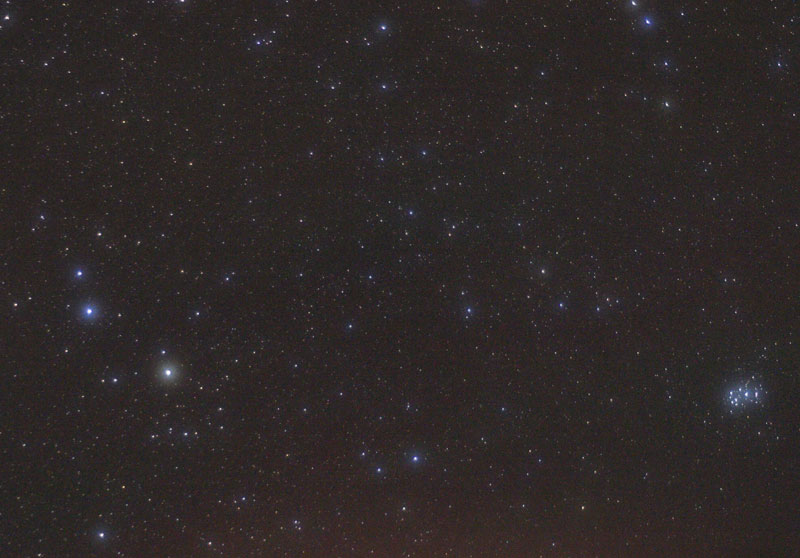
Night sky Constellations


    Remember the herald? 2,000 years ago the stars that individuals and the Magi saw at night were constant in their count and placement within the sky. For this reason they were given shapes and those shapes took many forms. We know them today as the zodiac and because some constellations passed over certain countries and lands, they took the meaning of those countries and lands.
The constellation known as Aries had the symbol of a Ram and related to Syria, Idumea and Judea. In 6 A.D. the area of Judea was placed under Syria. Prior to, it was independent. Therefore, any person seeking council from the zodiac would have used the sign of an Aries or Ram for its portents. Additionally, because Judea was Incorporated with Syria and Herod was the King of Syria and Palestine, his astrologers would have also been monitoring that same constellation. The Magi could predict where certain signs would be and this was most revealing one morning.


Constellation of Aries


    Genesis 1:14 states, "And God said let there be lights in the firmament....let them be for signs". The Ram in this particular sign is a lamb, not fully grown as yet. The lamb means to reign, have dominion or government. Additionally, the ram considered was also crowned with a circle. The most ancient name for this animal was "Baraziggar" or the "sacrifice of the righteousness. This alone would not have induced the Magi to travel so far, so what was the importance? It is, I believe, that the observation seen by the Magi was so statistically unbelievable that its occurrence had never happened or would never happen again. They had to be in wonder and awe beyond belief. All the planets that represented a king using Aries as the sign would have: the sun, Jupiter and Saturn in it. No big deal, it occurs every sixty years. The second point regarding a royal birth for consideration was the placement within the sky. Another point is whether the sign is ascending in the east or setting in the west as well as what signs are in procession. There is also a consideration of where the rising signs are located, meaning if their locations in the sky are closer to the horizon or at the highest point in mid heaven during their observation, all of this is very significant.


    The sun and moon have their role to play as well. The sun is considered to be of the most regal signature (Sun: King, moon: Queen) and have five planets that attend it because of that issue. The last piece of this puzzle was exaltation. This can be defined as the planetary location within a specific sign. Example: If the Sun were in The Aries. This would give impetus to the Sun's power in regal stature. Bright lights were important also. If Jupiter was seen as a bright light in a certain sign, which would lend importance to the overall signature event.
    On April 17, 6 B.C., the morning sky must have rendered the Magi into an unbelievable state. Was there a star, no? In the morning sky, was an unfolding event so rare as to defy anything they had ever seen or could hope to ever see.


    Aries was in ascendant, rising over the eastern horizon. All seven planets were in that Judea sign. This get better. When the Aries was in the mid heaven position, all seven planets were also in the Judea sign. Continuing, the Sun was in exaltation within the sign of The Aries at dawn and mid heaven along with both ruling planets of Jupiter and Saturn. The guardians of the sun being Jupiter and Saturn, proceeded immediately before the rising dawn. This was not all. The attendants of the moon (Queen), Mercury and Mars were there as well.
    The Magi had to be stunned on April 17, 6 B.C., someone of incredible significance was born, or about to be born in Judea. Probabilities of this magnitude "defy statistical quantification". The statistical alignments of seven planets in a specific orbital location, in front of specific stars that are moving through space and light years away at a specific point in the rotation of earth, all in motion and with different orbital mechanical probabilities, defy its occurrence. Yet, that is what happened.
That is why the Magi were compelled to travel to a distant location they were not aware of. Also, they were indeed guided by a planetary source but it was not just one star.